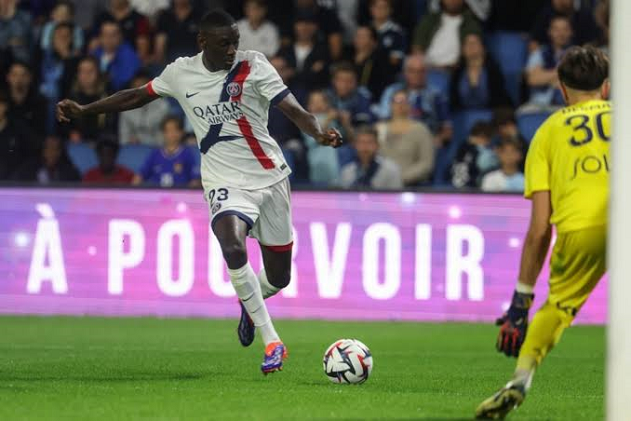

In major football leagues, marquee fixtures often generate excessive market attention, leading prices to drift from realistic probabilities. During the 2020/21 Ligue 1 season, this pattern emerged frequently—where “big match” branding inflated perceived goal potential and win chances of elite sides beyond tactical and statistical truth. Recognizing these misalignments is fundamental for value-oriented analysis, separating public sentiment from measurable data.
Why Big Matches Often Carry Mispricing
High-profile games attract public betting volume, causing the market to reflect emotional bias rather than calculated equilibrium. Pre-match narratives—form, star players, or rivalry tension—inflate implied probabilities, while the actual event dynamics remain constrained by risk-averse tactics. Thus, markets tend to overrate attacking outcomes or dominant favorites, creating subtle inefficiencies.
The Statistical Profile of Market Inflation
In Ligue 1 2020/21, matches deemed “big” (between top seven-ranked clubs) exhibited distinct tendencies: inflated totals lines and compressed odds on favorites.
| Category | Average Line (Goals) | Actual Average Goals | Average Favorite Odds | Fair-Implied Odds (True Model) |
| Big Matches (top 7 vs top 7) | 3.05 | 2.45 | 1.96 | 2.14 |
| Regular Matches | 2.75 | 2.78 | 2.05 | 2.03 |
Interpretation shows that totals lines were consistently overestimated while favorite odds reflected crowd favoritism. Elite-team prestige, rather than scoring probability, drove this distortion.
Where the Market Overreached Most
Mispricing concentrated around fixtures combining attacking identity and media excitement—those expected to “deliver spectacle.” Yet, elite sides often neutralized each other tactically.
Notable examples of mispriced matchups (2020/21 season):
- PSG vs Lyon (Dec 2020): Line opened at 3.25 goals, final score 0–1.
- Marseille vs Monaco (Jan 2021): Pre-match total 3.0, actual 1–1.
- Lille vs Lyon (Oct 2020): Total goal line 3.0, game 1–1.
- Monaco vs PSG (Feb 2021): Opened overweighted favoring PSG; match 2–0 to Monaco.
These cases indicate how star-centric narratives inflated totals and favorites beyond probability reality. Tactical compression—compact midfields and methodical risk control—constantly undermined the pricing assumption of open battles.
Mechanisms Behind Overvaluation
The overvaluation stemmed from three interacting elements:
- Public liquidity bias – large wagering volume on televised fixtures narrowed odds efficiency.
- Media amplification – narrative emphasis on goals and stars overshadowed tactical restraint.
- Historical inertia – past seasons with attacking benchmarks anchored high initial prices despite strategic evolution.
Once market corrections began, sharp bettors often captured unders or opposing lines at inflated odds.
How Data-Driven Observation via UFABET Exposed Patterns
Within dynamic betting conditions, traders operating through ทางเข้า ufabet168 could monitor real-time probability rebalancing during marquee Ligue 1 fixtures. The sports betting service’s live-odds flow often showed early overpricing on overs or heavy favorites before volume-driven regression. Analysts comparing expected goals (xG) during the first half against pre-line assumptions spotted clear dissonance: matches settling into tight tactical battles while prices maintained open-game indicators. Practiced observers interpreted this divergence as actionable value—timing entry points once emotional liquidity began to fade.
Comparing Reservation Pricing to casino online Probabilities
In contrast, probability structures found in casino online frameworks remain constant and independent of external sentiment, underscoring why sports markets behave uniquely. Football pricing intertwines math with psychology—when crowd enthusiasm inflates perceived likelihoods, the underlying distribution becomes exploitable. Recognizing transient market emotion contrasts with the fixed statistical odds embedded in casinos, sharpening the bettor’s appreciation for volatility as opportunity rather than randomness.
Tactical Traits That Drive Price Inflation
Analysts noted repeating preconditions whenever big-match odds skewed upward. These included:
- Opposing elite squads prioritizing possession safety over vertical progression.
- Coaching setups emphasizing transition denial rather than offensive risk.
- Midfield numerical symmetry limiting expected goals accumulation.
- Commercial scheduling amplifying viewer expectations but compressing real performance variance.
The paradox is apparent: the more celebrated the fixture, the higher the public’s scoring expectation, yet the lower the actual open-play probability.
Failure Conditions of the “Overrated” Thesis
Despite general consistency, the model underperformed when fatigue or fixture congestion pushed teams into unexpected looseness. Matches immediately following European competition, for instance, sometimes inflated goal counts legitimately due to defensive disorganization. Understanding these situational exceptions prevented rigid misapplication of the bias concept.
How to Rationally Evaluate a Potentially Overpriced Fixture
A reasoned checklist improves assessment accuracy:
- Compare bookmakers’ implied xG totals to historical matchup data.
- Measure each side’s defensive line height and pressing intensity pre-match.
- Adjust for fatigue cycles and squad rotation depth.
- Identify motivational asymmetry—title contender vs mid-season safety seeker.
- Track public betting weight and line movement during the final three hours.
By synthesizing these criteria, bettors distinguish sentiment-driven odds from justified market moves.
Summary
The 2020/21 Ligue 1 season reinforced the classic betting lesson: public attention distorts pricing, especially in big matches. Overs and favorites drew disproportionate investment, inflating expectations beyond realistic performance profiles. Tactical parity and risk management repeatedly turned “high-scoring promises” into measured stalemates. For analytical bettors, these fixtures offered consistent contrarian value. Disentangling emotion from probability became the most reliable way to find truth beneath the dazzle of the spotlight.