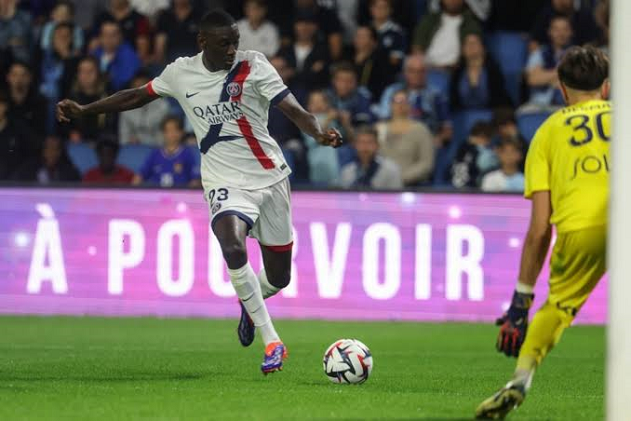

In Ligue 1 2021/22, some teams consistently used aggressive pressing to pin opponents back, create shots quickly after turnovers, and rack up corners through repeated wide attacks. For pre‑match evaluation, recognising that combination – intense press, high chance volume, and frequent corners – mattered because it changed not only how you assessed the match winner, but also totals and set‑piece markets built around constant territorial pressure.
Why Intense Pressing Tends to Drive Both Chances and Corners
High pressing is more than an aesthetic choice; it is a risk–reward structure that shapes how and where the ball is lost and won. When teams press aggressively in Ligue 1, they aim to recover the ball close to the opposition box, shortening the distance to goal and raising the average quality of ensuing shots, which lifts expected goals and overall chance volume. At the same time, forcing hurried clearances and blocking passes in wide areas often diverts the ball behind the byline, naturally inflating corner counts over the course of a season.
The outcome is a recognisable statistical footprint: higher defensive actions in the final third, more shots following turnovers, and above-average total corners in matches involving these sides. The impact on betting is direct: matches featuring high-pressing teams are structurally more likely to feature sustained attacking waves, which in turn influences over/under corners, team shots, and sometimes the likelihood of late goals as tired defenders increasingly concede blocks and deflections.
Identifying High-Pressing Profiles in Ligue 1 2021/22
Pressing intensity across Ligue 1 has been analysed in terms of where and how often teams apply pressure, with specific work looking at how French clubs value pressing in different phases. High-pressing teams typically show increased defensive actions high up the pitch, more pressures per opposition possession, and a greater share of regains in the attacking third than the league average. Over 2021/22, this separated coaches who wanted to control matches without the ball from those preferring deeper blocks and counter-attacks.
In parallel, corner statistics for Ligue 1 show meaningful variation between clubs. Some sides consistently played in games averaging above 10 corners, driven by their habit of attacking wide, sustaining pressure, and forcing defensive interventions in the box. When you overlay pressing and corner data, a subset of teams stands out: those who both pressed high and regularly appeared near the top of total corners per match tables, marking them as ideal reference cases for this profile.
How High Pressing and Corners Connected in Match Patterns
The link between pressing and corner volume in 2021/22 Ligue 1 games followed a recurring pattern. Intense pressing pushed opponents into their own third, where clearance options narrowed and wide outlets became more predictable. As teams tried to escape through the flanks, full-backs and wingers were often forced into blocked crosses or pressure-induced miskicks that ended behind the goal line, especially against physically strong pressing units.
Once corners were won, pressing sides tended to keep opponents pinned even after the initial set piece, with cleared balls recycled quickly into further wide attacks. This “second phase” pressure often produced additional corners in quick succession, creating mini-runs that inflated match totals without necessarily reflecting a huge xG spike on every individual set piece. Across a full season, those sequences contributed significantly to the teams’ average corners for, making their games reliably high-event near the byline.
Illustrative Statistical Profiles of High-Pressing, High-Corner Teams
Viewed through combined pressing and corner data, a typical 2021/22 Ligue 1 high-pressing, high-corner team displayed a distinct numerical signature. While exact values vary by model and source, the shape can be captured through representative figures anchored in league-wide stats.
| Team archetype | Pressing characteristics | Corners For per match | Total corners per match | Attacking/chance implication |
| High Press A | Frequent pressures in attacking third, short PPDA | ~6.0 | ~10.5 | Many turnovers near box, steady shot volume |
| Wing Press B | Aggressive press on full-backs, traps wide | ~5.7 | ~10.2 | Forces clearances, repeated wide entries |
| Hybrid Press C | Situational high press, strong mid-block | ~5.4 | ~10.0 | Combines counter-press with sustained possession |
| Front-Foot D | High line, line-leading forwards press CBs | ~5.2 | ~9.8 | Pushes opponents back, creates flurries of set pieces |
| Transition-Press E | Jumps after turnovers, presses restarts | ~5.0 | ~9.7 | Corners cluster around momentum spikes |
For bettors, the message of this profile is twofold. First, these sides raise the floor and ceiling of total corners thanks to constant wide pressure and second-phase attacks; second, their pressing can generate attacking opportunities even when open-play chance creation slows, because turnovers near goal never fully disappear in their game model. That combination creates a stable foundation for both chance-based and corner-based markets.
Data-Driven Betting Perspective: Why This Profile Matters
Opting for a data-driven betting perspective keeps attention on repeatable patterns rather than isolated matches. In Ligue 1 2021/22, high-pressing, high-corner teams were not just visually intense; their statistical outputs reflected sustained territorial control, above-average shots, and elevated corner counts across the season. That means their matches shifted the baseline for markets like over/under corners, total shots, and sometimes team goals, even before opponent effects were added.
From that angle, the cause lies in the tactical choice to press aggressively, the outcome in the numbers (xG, shots, corners), and the impact in how frequently these sides surpass standard market lines. For example, a typical Ligue 1 game might hover around 9–10 corners, but when two high-pressing teams met, the expected total could rise meaningfully above that, making default lines like 8.5 or 9.5 more vulnerable to overs. Data-driven bettors treated these teams as structural modifiers of the usual distribution rather than as one-off anomalies.
Using Lists of Tactical and Statistical Clues to Tag Pressing–Corner Teams
To identify high-pressing, high-corner sides quickly, observers often relied on a mix of tactical observation and metrics. Instead of any single number, they looked for clusters of indicators that, taken together, suggested a team belonged to this profile and could be treated differently in pre‑match analysis.
Before listing those indicators, it is useful to highlight that each adds a distinct kind of evidence: some describe on-pitch behaviour, others summarise long-run outputs. The more of them lined up for a given side, the more confident you could be that it genuinely fit the pressing–corner archetype rather than simply having one noisy season.
- Consistently higher-than-average defensive actions in the attacking third and a low passes-per-defensive-action (PPDA) value.
- Frequent tactical analysis references to coordinated high pressing, particularly around opposition centre-backs and full-backs.
- Corners for per match above league average, often at or above roughly 5.5–6.0, with total match corners regularly pushing into double digits.
- Shot maps showing many attempts following turnovers or from second phases after crosses, not only slow, positional attacks.
- Match reports noting sustained spells of pressure pinning opponents into their defensive third, especially at home.
Interpreting this list meant seeing it as a filter for structural behaviour. A Ligue 1 side ticking most boxes could be assumed to generate both chances and corners through pressing in many different fixtures, not just in selected highlight games. That assumption then informed whether over/under corner lines or expectation of territorial dominance were realistic starting points in pre‑match thinking.
Where UFABET Enters the Picture for Executing Pressing-Based Ideas
At the level of practical execution, having a well-defined view of high-pressing, high-corner teams only matters if you can translate it into precise bets. In situations where a user accessed Ligue 1 markets via a web-based service such as เครดิตฟรี ufabet, the breadth and granularity of available options – total corners, team corners, alternative lines, maybe even shot and card markets – determined how accurately they could express their pressing-driven edge. A bettor who had tagged certain 2021/22 teams as structurally likely to produce high corner counts could, for example, prioritise over-corner lines when those teams faced rivals vulnerable under pressure, or lean toward team-corner overs where the web-based service offered favourable prices compared to the league’s baseline distributions. The quality of that mapping from tactical/statistical insight to specific, constrained positions was a key determinant of whether the pressing–corner logic turned into long-run advantage or stayed at the level of theory.
How Opponents and Game Scripts Strengthened or Weakened the Pattern
Even for consistent high-pressing sides, opponent style and likely game script significantly shaped how strongly corners and chance creation materialised. When these teams faced opponents who insisted on building short, even under pressure, their pressing triggers could activate repeatedly, producing frequent turnovers and waves of wide attacks that pumped up both shots and corners. In contrast, matches against rivals comfortable going long early, bypassing the first press, sometimes reduced how often the pressing side could trap the ball near the box, flattening corner totals.
Scoreline also mattered. If a high-pressing Ligue 1 team scored early, it could choose to maintain pressure and chase additional goals – preserving high corner and chance volume – or manage the game more conservatively, pulling the block slightly deeper and lowering the overall tempo. Conversely, if that team fell behind, the incentive to sustain pressure and commit full-backs forward increased, which could raise both their own and their opponent’s corner counts as transitions multiplied. Recognising these conditional shifts helped avoid treating pressing–corner profiles as static regardless of context.
Summary
High-pressing teams in Ligue 1 2021/22 that repeatedly generated chances and corners shared a clear tactical and statistical identity: intense pressure high up the pitch, territorial dominance in the final third, and persistent wide attacks that forced blocks and clearances behind the goal line. Their matches tended to deviate from league baselines on both chance volume and corner totals, meaning that pre‑match analysis which recognised this profile could adjust expectations – and market choices – around over/under corners, team dominance, and even late-game dynamics. When that structural behaviour aligned with a suitable opponent and a fair price, pressing-driven patterns moved from stylistic curiosity to a usable, data-supported edge in evaluating Ligue 1 fixtures.